
Electrical Engineering
Prospective students
You are not yet enrolled at Paderborn University, but are interested in electrical engineering? Are you interested in technology, mathematics, and computer science, and would like to delve deeper into the subjects? We'll show you why these subject areas are an important part of the electrical engineering degree programme and how you can broaden your horizons. If this sounds exciting to you, the Electrical Engineering degree programme could be the perfect fit for you!
Curious? You can find all the information about enrolment and the course of study on the following pages:
Study Beginners
All study beginners can find all the important information they need to get started on the following page: Orientierungsphase
Are you already enrolled on the Electrical Engineering degree programme? Then you will find a brief overview of all the important information about your degree programme below.
Have you ever read through your Examination regulations? They regulate the formal study requirements for your degree programme and are legally binding. In particular, you will find answers to the following questions:
- Which courses are required for me?
- Which formalities are relevant for my final module and thesis?
Are you interested in certain modules and looking for their description so that you can prepare better? The Module handbook, which is also a legal component of the examination regulations, can answer the following questions about your courses:
- What content is covered in this course?
- What prior knowledge is required, and what is the expected workload?
- What form does the examination take and how many ECTS credits are awarded?
Read your Examination regulations and Module handbooks here. Make sure that you select the latest module handbook for your examination regulations.
The examination board is responsible, among other things, for ensuring compliance with the examination regulations and observing the procedural regulations adopted for conducting the examinations.
It is also responsible for recognising study and examination achievements.
If, for example, you have already studied another subject or would generally like to have achievements recognised, it is best to contact the Electrical Engineering Examination Board.
Would you like to expand your technical, linguistic and cultural knowledge? Then a semester abroad is just the thing for you! As part of the Electrical Engineering degree programme, you can choose from many programmes in different countries around the world.
Are you interested and want to find out more about the requirements and opportunities for financial support, language acquisition and the right contacts?
Then let us answer all your questions about studying abroad here, take a look at our partner universities and expand your skills.
Information on changing your examination regulation
The Electrical Engineering degree programme was reaccredited on 1 October 2024 for both Bachelor's and Master's degrees. Accordingly, there are the new examination regulations versions EBA v7 and EMA v5, each of which has changes compared to their predecessor versions. If you are interested in switching to the new version of the examination regulations, you can contact the Electrical Engineering Student Advisory Service at any time.
You can also change your examination regulations yourself via PAUL → Studies → Requests. Please note that the request “ZPS: PO-Wechsel Informatik/Computer Engineering/ESE” is only available during the periods from 15 February to 15 March and from 15 August to 15 September. Make sure not to register for any new courses until the version change has taken place.
If you have any questions about the transitional regulations or the recognition of academic achievements when switching, this document can also help you.
Bachelor Electrical Engineering
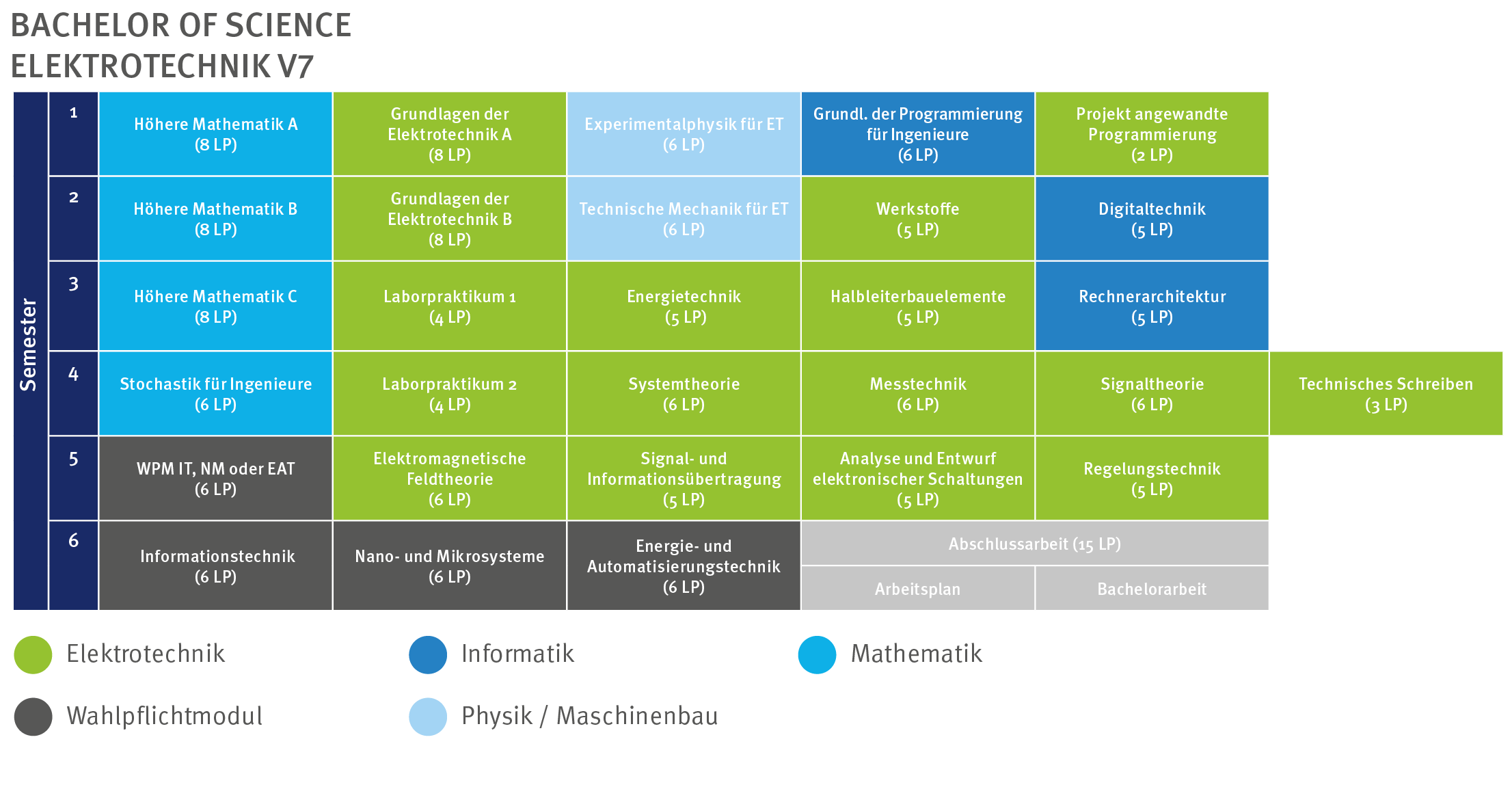
While this study plan is not a mandatory requirement, it can certainly serve as a valuable guide. Generally, it is advisable to take the respective courses in the specified order, but what happens if things don't go according to plan?
In such cases, it's helpful to have an overview chart for all required courses readily available. By keeping this plan in mind and utilizing the knowledge from your module handbook, you'll be well-prepared for each semester!
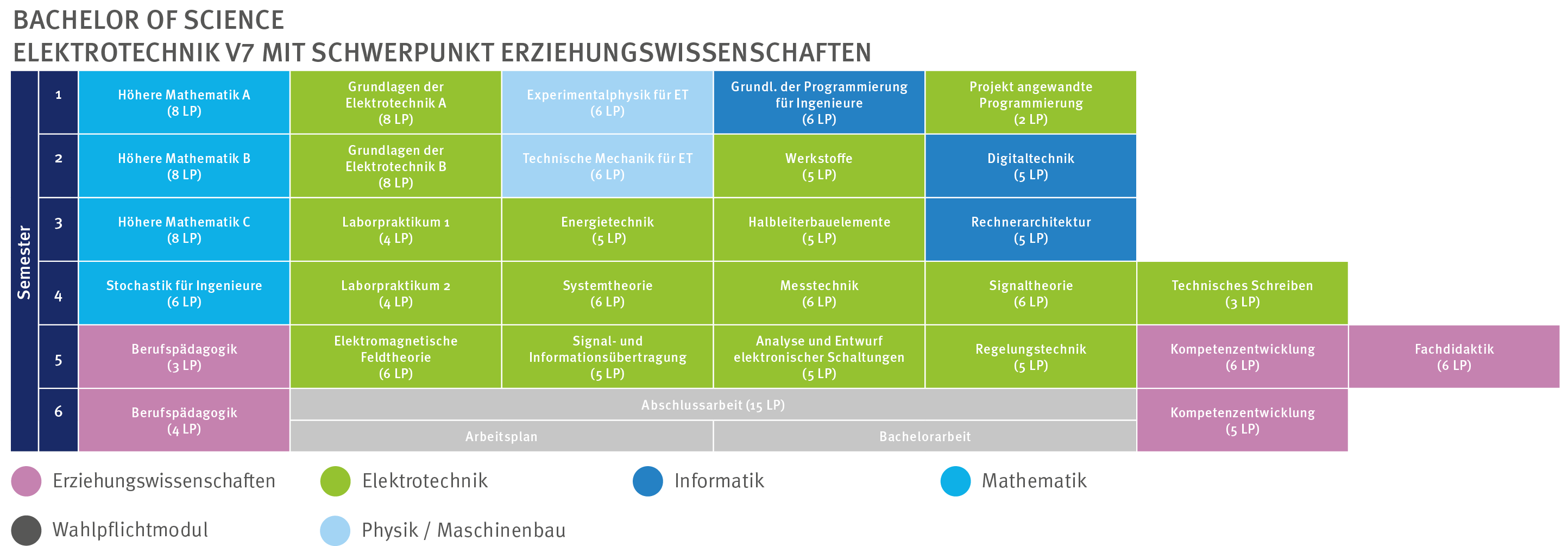
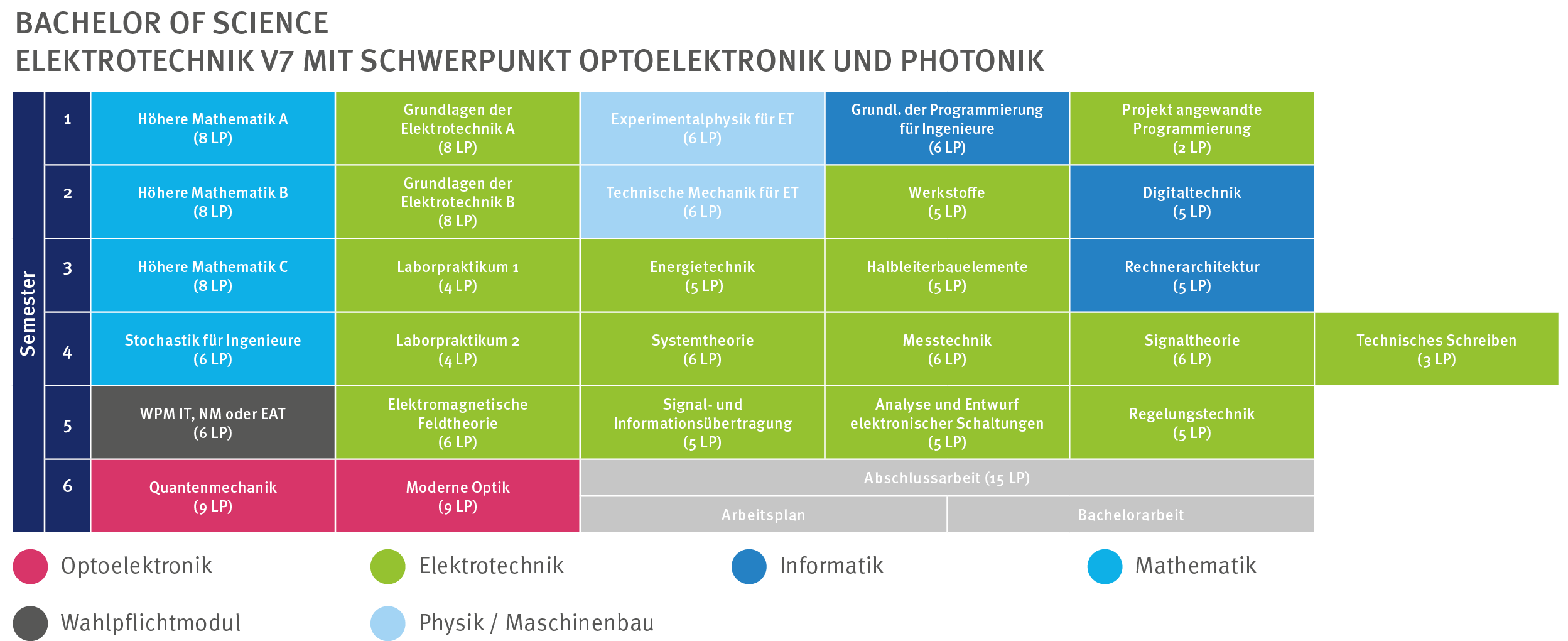
At Paderborn University, you can study the Bachelor's degree programme in Electrical Engineering with different specialisations from the second stage onwards. Here, you have the option of concentrating on Education Studies or Optoelectronics and Photonics in addition to Electrical Engineering.
As an alternative to the above study plan for Electrical Engineering, your study plan with a specialisation in Education Studies would look like this:
Are you planning to start your Bachelor's thesis soon, but don't yet know which department or topic would be right for you? Then this overview can help you find a possible topic for your thesis. It will also help you get to know the individual departments better and keep you up to date with the latest news.
Master Electrical Engineering
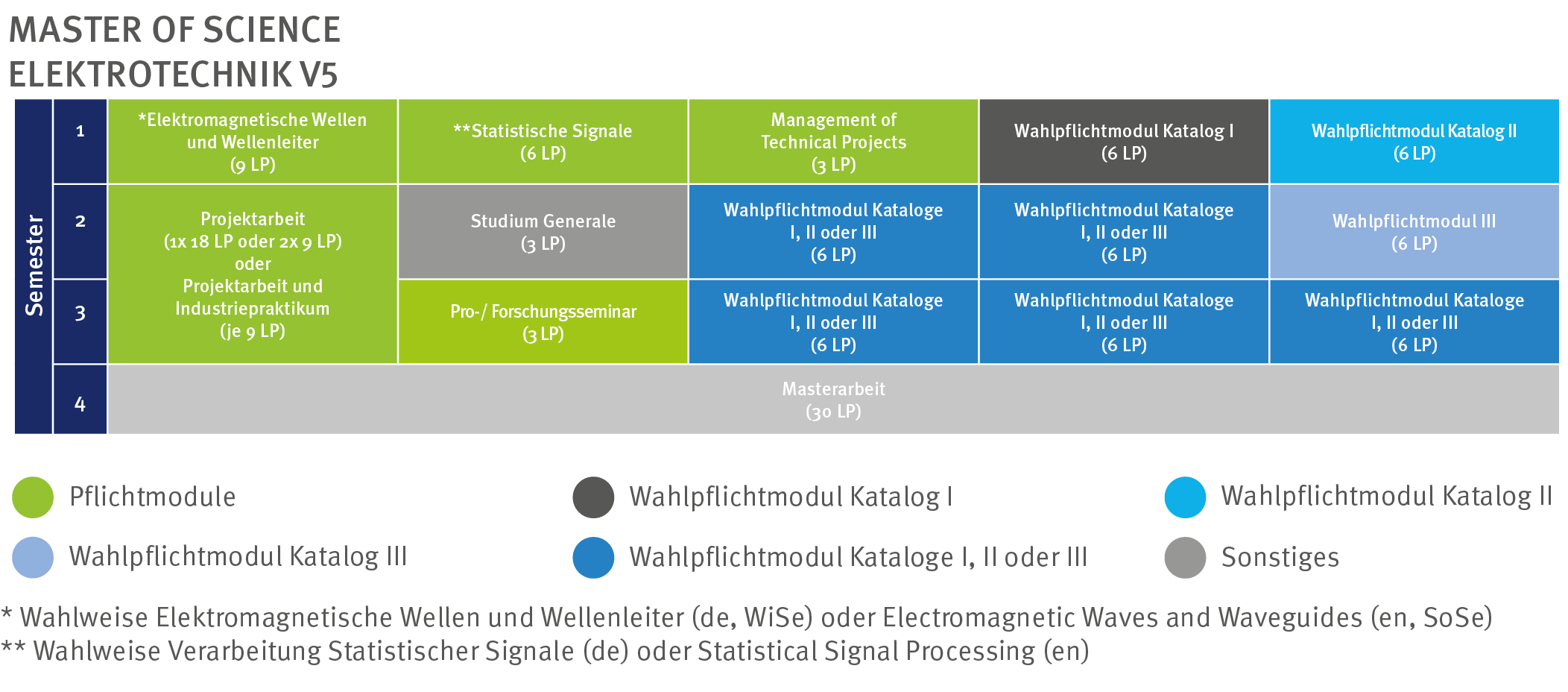
You are not required to strictly follow the study plan for the Master's degree program in Electrical Engineering, but it can be a helpful guide for your studies. In addition to the compulsory elective modules, you will also need to consider the specialisations you wish to pursue within your degree program. The department's website and the current module handbook can assist you with this information.
As you know, you have to choose specialisations for your Master's degree in Electrical Engineering. Have you not yet decided on a specialisation, or can't make up your mind? You have the choice between these specialisations. You have to decide on three of them:
- Energy and Environment
- Cognitive systems
- Communication Technology
- Microelectronics
- Optoelectronics
- Process dynamics
You can find the courses offered within your specialisation for the current semester directly in PAUL, where you can register during the registration period. Additional information, such as course instructors, schedules, and locations, is also available there.
If you are interested in the Master's degree programme in Optoelectronics and Photonics or are already enrolled in it, the Physics website is the right place for you.
Are you thinking about which project you can work on, or would you like to write a thesis soon? On this overview page of the various departments, you can see which Electrical Engineering projects are currently being called for proposals and which topics are currently open for your Master's thesis.
During your Master's degree programme, you can complete a voluntary industrial internship. This internship can replace a semester project and must last 8 weeks. It is graded and is worth 9 ECTS credits.
You also have the opportunity to complete the industrial placement abroad.
For information on the types of activities that can be recognised as part of this internship and the necessary documents required, please refer to the Guidelines for the module M.048.28000 Industrial internship. This document also provides detailed information on exceptions, additional regulations, internship certificates, and work reports. The current contacts and helpful links to internship exchanges and job offers can be found on the page on Information on industrial internships.
Studienberatung Elektrotechnik (Studi.ET)
Warburger Str. 100
33098 Paderborn